 Botswana Mining Review Comprehensive Coverage of the Progress and Achievements in the Mining Sector



Related Articles


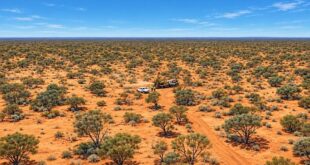
Environmental authorisation has cleared the way for the first field programme on Copper Licences 548 and 549 in Ngamiland, North West Botswana, putting an AI driven exploration effort to its first test on the ground. Botswana Minerals PLC (AIM:BMIN; BSE:BMIN) will begin with a soil sampling programme designed to narrow its targets towards drill sites.
The licences form part of a 7,074 square kilometre landholding in the North Eastern Damara Belt, a region considered prospective for copper and other minerals. The fully funded programme aims to identify and rank the most promising targets and select the best copper prospect for drilling. Sampling will be paid for from existing cash resources and the company hopes it will progressively and rapidly narrow the targets towards drill sites.
Chairman John Teeling said the approval marks a turning point. “I am delighted to advise that we have received environmental authorisation which paves the way for our first field programme on our copper licenses. We continue to make progress towards defining drill sites. Analysis of the historical core and the acquisition of further geological and geophysical information has focused attention on what we believe will be our strongest drilling targets,” said Teeling.
The company’s geologists have re-logged relevant historical drill cores, additional technical reports, electromagnetic data and geochemical information have been recovered and assessed with technical partner Planetary AI, using its Xplore platform. A Competent Person’s Report dated April 2018 recorded copper mineralisation in drillhole SHAK0007, within the current licence area. It described copper associated with haematite and quartz veining, together with minor pyrite and chalcopyrite, a copper sulphide mineral, in quartz veinlets in shale. Botswana Minerals said the associations support further investigation of hydrothermal systems, in which hot fluids transport and deposit metals.
Further review of historical airborne electromagnetic data has identified four conductors within a lens shaped magnetic feature under investigation. More than one previously selected Xplore target area sits close to a conductor, and one conductor extends north from the vicinity of SHAK0007 along a corridor identified in the magnetic data. The company noted that neither the 2018 report nor the conductor information fed into the original target selection, so their later comparison adds independent support for the targeting rationale. The cause of the conductivity has not been confirmed.
Newly recovered and digitised historical geochemistry has also revealed anomalies in copper, zinc and associated pathfinder elements. These data are being integrated with the drill core observations and geophysics to refine exploration priorities.
