 Botswana Mining Review Comprehensive Coverage of the Progress and Achievements in the Mining Sector


Related Articles


Botswana has built one of Africa’s most technologically sophisticated bulk water distribution systems, transforming its command center outside the capital into a regional reference point for utility automation and real-time monitoring.
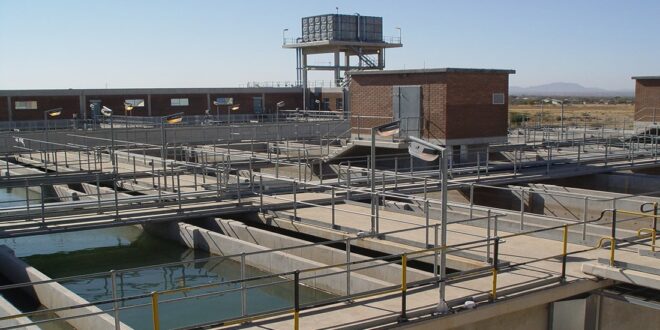
Operating out of the Mmamashia Water Treatment Plant near Gaborone, the state-of-the-art Supervisory Control and Data Acquisition (SCADA) system manages the North-South Carrier (NSC), a 450-kilometer pipeline that transfers raw and treated water across the country. The facility provides centralized oversight over dams, pumping stations, reservoirs, and purification plants without requiring operators stationed permanently along the physical route.
The success of the infrastructure developed by South African engineering firm Khato Civils comes after an initial political deadlock. Lawmakers across party lines originally stalled approvals over safety and feasibility concerns. Today, the system is widely cited as a benchmark, attracting study delegations from the Southern African Development Community (SADC).
“From Dikgatlhong Dam all the way to Moralane, Pump Station Two, Palapye, and ultimately Gaborone, there are no operators permanently stationed along the route,” said Kebuelefe Sefako, Control and Instrumentation Engineer for Bulk Supply at the Water Utilities Corporation (WUC). “Every action is controlled to protect the integrity of the network.”
To safeguard critical national infrastructure against physical and digital threats, the network operates on a closed, dedicated fiber-optic network backed up by radio channels. System access requires multi-tier authentication, limiting manual overrides strictly to authorized engineers.
The automation provides instant diagnostic telemetry tracking pump temperatures, vibration levels, flow rates, and pressure. If a power failure or sudden drop in pressure occurs, controllers can isolate affected sections from a single console, drastically reducing response times and operational costs.
Despite automation, human oversight remains critical to verify reading anomalies and make high-stakes maintenance decisions.
“Technology supports decision-making, but it does not replace engineers,” Sefako said. “Human judgement remains essential whenever instruments produce abnormal readings or field verification becomes necessary.”
The utility faces ongoing challenges from intentional tampering and vandalism, which force costly shutdowns and water losses. Isolating a damaged section on a 1.2-meter pipeline can require draining up to 10 kilometers of treated water amounting to more than 20 million liters lost per incident.
To counter invisible ground leaks and network drift, WUC is currently evaluating thermal satellite mapping technologies and conducting routine sensor calibrations to maintain operational continuity.
