 Botswana Mining Review Comprehensive Coverage of the Progress and Achievements in the Mining Sector


Related Articles


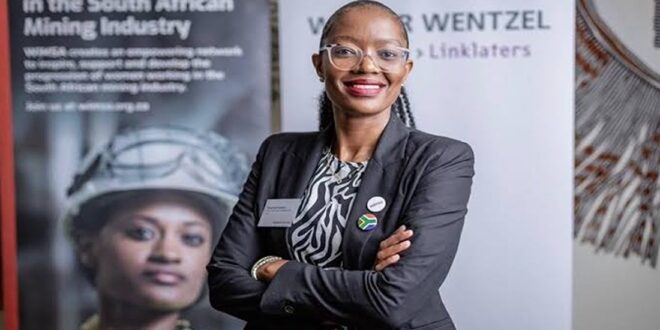
A seat in the boardroom can signal progress but the authority to shape what happens once there may be a more meaningful measure of how far women have advanced in mining. That distinction increasingly shapes the agenda of Women in Mining South Africa, which is pushing the industry to look beyond the number of women entering senior positions and examine whether they hold the influence, authority and support needed to shape decisions. Closing that gap requires organisations to examine who holds decision rights, how succession pipelines are built and who receives sponsorship and access to strategic decision-making forums. It also requires women to recognise the value of their expertise and assert their voices.
WiMSA President, Mogaleadi Seabela explained that the progression of women into senior roles represents genuine progress but titles alone do not guarantee influence. “Where informal networks, historical power structures and decision making forums continue, influence remains concentrated elsewhere, outside the boardroom,” said Seabela. In some cases, women are given responsibility without the corresponding resources, budget, sponsorship or authority to act. For Seabela, this marks an important shift in the conversation around representation, from being grateful to occupy a seat to recognising that competence and expertise provide a basis for meaningful participation and confident decision making, a distinction at the heart of WiMSA’s discussion “From Seat at the Table to Voice in the Room”, held as part of its Women in Mining Workshop at Electra Mining Africa.
That question of influence begins well before the boardroom. Labour mobility can be a significant career accelerator in mining, yet the opportunity to relocate or take on cross border assignments is not experienced equally by men and women. Moving for a career can mean leaving behind children, partners and established support networks, while practical considerations around accommodation, schooling, healthcare and caregiving expectations add further complexity. “Mobility must be designed as an organisational support system,” noted Seabela. WiMSA supports women through those transitions by building networks across South Africa and other mining regions and connecting women with mentors who have already navigated similar moves.
The same principle extends to the technical pipeline. Statistics from South Africa’s top engineering universities report more than 50% female graduates, according to Seabela, yet the numbers completing graduate programmes and progressing into leadership decline sharply. She attributes this to competencies required beyond technical expertise, including leadership, commercial acumen, digital capability, strategic thinking and the ability to navigate organisational systems. WiMSA addresses these gaps through university workshops, mentorship and exposure to industry leaders, while pushing the industry beyond mentorship towards sponsorship, supported by transparent succession planning and business critical assignments that let women demonstrate capability at scale. The pipeline must also begin earlier, which is the purpose of WiMSA’s annual STEM career fair, run in partnership with mining organisations, the Department of Education and institutions of higher learning.
Seabela argues that the conversation must also recognise women as owners, entrepreneurs, investors and suppliers, with opportunities spanning materials supply, technology, professional services, logistics and energy. A smaller enterprise may offer a strong product and still struggle with capital, scale or the complexity of procurement systems that favour established businesses. According to Seabela, meaningful inclusion must extend beyond employment targets to economic participation, with enterprise development programmes judged by whether more women owned businesses actually secure work across core areas of the value chain. Technology presents another opportunity, though Seabela cautions against assuming digital transformation is inherently inclusive. AI and emerging technologies can remove physical barriers, improve safety and open new career pathways, but they also reflect the assumptions of the people who design them. “If the barriers to progression of women are not confronted and addressed, AI and emerging technologies will not accelerate transformation. Women need to be involved as designers, engineers and decision makers rather than only as users,” argued Seabela.
Partnership underpins all of this. “WiMSA cannot do it alone,” said Seabela, pointing to relationships spanning STEM exposure, mentorship, industry engagement and leadership that connect young girls considering STEM careers to women building leadership. That ambition sits behind this year’s theme, Break the Ground, Own the Shift. “We want women to have a stronger voice, influence, authority and impact,” stressed Seabela. Over the next five years, she wants women represented across the full mining value chain, workplaces where women can learn, lead and progress without unnecessary structural and cultural barriers, with safety encompassing both physical and psychological wellbeing. Most importantly, she wants inclusion to become embedded in the industry’s operating culture to the point where the business case no longer needs to be made. “I would like us to reach a point where we no longer have to make the business case for women’s inclusion because the industry has experienced what becomes possible when the full talent pool is genuinely included and everyone knows that they belong,” concluded Seabela.
