 Botswana Mining Review Comprehensive Coverage of the Progress and Achievements in the Mining Sector


Related Articles



A new solar economy is taking shape in Maun, with Botswana positioning the northern tourism hub as a centre for renewable-energy investment while building the technical skills needed to support the sector’s expansion.
Speaking at Energy Week at Maun Technical College on 21 September 2026, Acting Director in the Department of Energy Tebogo Selaelo said the government had deliberately brought the programme to Maun as the region prepares to host Botswana’s largest planned solar power plant, with a capacity of 500 MW. “We have designated Maun as the solar hub for Botswana,” said Selaelo.
The planned development is expected to create opportunities beyond power generation, spanning construction, logistics, accommodation, supplies, operations and maintenance. The government is therefore seeking to ensure that local communities are equipped to participate in the emerging value chain. Selaelo noted, “We have brought this training to Maun because we want Maun to be ready. When the opportunity arrives, the youth of this region must be in a position to seize it.”
The skills drive is being pursued through a trainer-of-trainers model, designed to expand Botswana’s technical capacity by equipping instructors who can subsequently train larger numbers of artisans. “If you train one installer, you create one skilled person. If you train one instructor, you create a source of skills that will produce hundreds of competent artisans every year, for years to come,” remarked Selaelo.
The approach is also supporting the expansion of Botswana’s rooftop solar programme. By the end of July 2026, the country had received 1,077 rooftop solar applications, of which 876 had been approved and 455 systems installed and commissioned, adding 31 MW to the national energy mix. However, household uptake remains below 30%, with concerns around installer qualifications identified as one of the barriers to wider participation. The government is reviewing the programme and plans to establish a National Register of Certified Solar Installers by January 2027, with certified installers expected to receive verifiable Green Cards.
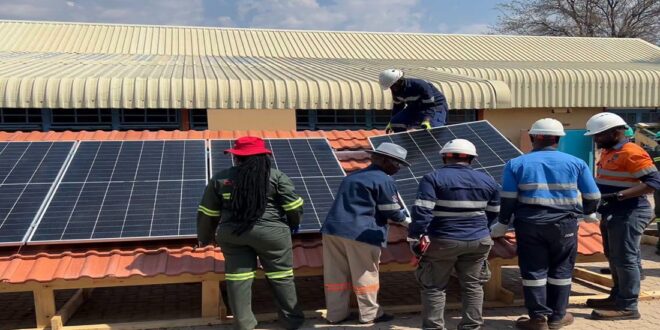
Meanwhile, 22 officers are undergoing a one-week Rooftop Solar Practitioner Training at Maun Technical College, combining classroom instruction with practical training. A further 20 participants are undertaking instructor training, building on 39 senior instructors and inspectors already trained through the programme. The wider skills and awareness programme has also brought together 60 facility managers from government ministries, departments and state-owned enterprises for training on energy efficiency, energy conservation and rooftop solar technologies.
Supported under the EU-funded ASPIRE initiative, the programme brings together the Ministry of Minerals and Energy, Botswana Power Corporation and Botswana Energy Regulatory Authority, alongside technical and academic partners including the University of Botswana’s SOLTRAIN project. As Maun prepares for a larger renewable-energy footprint, the focus on skills, standards and local participation signals an effort to ensure that the economic value of the solar transition extends beyond generating electricity.
