 Botswana Mining Review Comprehensive Coverage of the Progress and Achievements in the Mining Sector


Related Articles


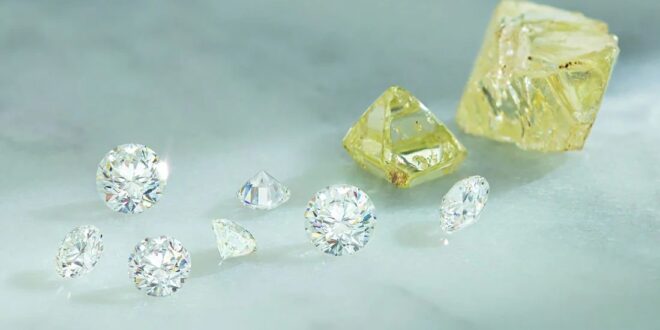
For decades, the diamond industry has sparkled with an aura of timeless romance and unyielding value. But beneath the polished surface, deep fissures are appearing, leading some to declare a rapid and unprecedented collapse of an industry once synonymous with enduring luxury. While some analysts temper the alarm, the sheer scale of the downturn has the sector, and the economies dependent on it, bracing for a potentially seismic shift.
Leanne Kemp, a prominent tech entrepreneur and academic, is among the most vocal proponents of the “disassembly” theory. She points to a litany of alarming symptoms: plunging revenues, shuttered operations, and, perhaps most crucially, a growing disillusionment with diamonds’ cultural and economic relevance. “These are not isolated events,” Kemp insists. “They are symptoms of an industry whose cost structures, cultural relevance, and geopolitical foundations are no longer fit for the moment.”
The last quarter has laid bare the severity of the crisis. Anglo American’s De Beers, long the undisputed titan of the diamond world, has seen its revenues plummet by a staggering 44%, now sitting on a daunting $2-billion worth of unsold stock. The consequences are stark: reports from the mine workers union indicate De Beers plans to shed over 1,000 jobs at its Debswana joint venture in Botswana, a crushing blow to an operation that forms the very backbone of the nation’s economy.
Russia’s Alrosa, grappling with heavy international sanctions, has fared no better, reporting a precipitous 77% plunge in profits and halting operations at key mining sites. Petra Diamonds, a significant player, is reeling from a 30% decline in sales, the departure of its CEO, and is now frantically selling off assets to stave off collapse.
The domino effect stretches across the globe. Australia’s Lucapa entered voluntary administration last week, while Sierra Leone’s Koidu Limited was forced to shutter operations and lay off more than 1,000 employees after a devastating $16-million loss due to labour strikes. Even Lucara, operating in both Botswana and Canada and known for its exceptional finds, is now facing a “going concern” warning despite ongoing investment and production records.
Kemp argues that the diamond’s traditional narrative of permanence, romance, and rarity no longer resonates in a world increasingly demanding ethical sourcing, sustainability, and transparency. The glitter, it seems, has lost some of its moral lustre.
However, not everyone in the industry believes the end is nigh. Paul Zimnisky, a respected industry analyst, offers a more tempered view. “This has been a painful period, especially over the past three years,” he said. He attributes much of the current downturn to a post-Covid demand correction following record sales in 2021 and 2022, a luxury recession in China, and the disruptive, undeniable rise of lab-grown diamonds.
Zimnisky believes that an easing of these pressures could yet see the sector return to growth. Crucially, he stresses that the industry’s very survival hinges on its ability to rekindle desire for natural diamonds. “If the industry gets lethargic and loses its way on the marketing front, all bets are off,” he warned.
The spotlight now firmly rests on De Beers. Once synonymous with manufactured scarcity and aggressive branding, the company itself is now reportedly up for sale. Anglo American has slashed its valuation by a staggering $4.5-billion in just over a year, and critically, no clear buyers have emerged.
Earlier this month, in a move that signals a strategic pivot, De Beers announced it would shut down its lab-grown diamond jewellery brand, Lightbox. This decision marks a significant return to its historical roots and a renewed focus on natural diamonds – the very stones that inspired its iconic “Diamonds are Forever” slogan. The move is a desperate attempt to reposition the company amid intense industry pressure.
While Kemp champions the future of diamonds lying in verifiable origin and ethical narratives rather than nostalgic appeals, Zimnisky, though more optimistic about De Beers’ future under new ownership, agrees that the cultural meaning of diamonds is undeniably shifting. “There are constantly changing cultural norms and behaviours,” he noted.
A fresh campaign is already underway, with De Beers and Signet launching an initiative specifically targeting “Zillennials,” the microgeneration born between 1993 and 1998, hoping to reignite their interest in mined diamonds.
The idea of repositioning diamonds as stable, tradable assets has also been mooted, but Zimnisky remains sceptical. “Diamonds are not fungible like gold,” he explained. “There’s more friction in secondary trading. Still, the rarest and highest quality stones will continue to be seen as stores of value.”
For economies heavily reliant on the diamond market, such as Botswana, Canada, Namibia, Angola, and even Russia, the stakes could not be higher. Zimnisky’s parting words serve as a stark reminder: “This is a luxury product — it needs to be merchandised as such. All stakeholders must contribute to shaping the message.”
The old era of diamonds, steeped in mystique and protected by monopolies, is clearly drawing to a close. What emerges next must be leaner, far more transparent, and critically, rooted in today’s values. The glitter, for now, hasn’t completely faded, but it desperately needs a new reason to shine.
