 Botswana Mining Review Comprehensive Coverage of the Progress and Achievements in the Mining Sector


Related Articles


Botswana’s electricity equation is beginning to change, from a country accustomed to supplementing domestic generation with imports to one with ambitions of becoming a net power exporter. New renewable-energy capacity, stronger performance from Morupule B Power Station and a more diversified generation mix are giving the country greater control over its electricity supply while opening the prospect of surplus power for regional markets.
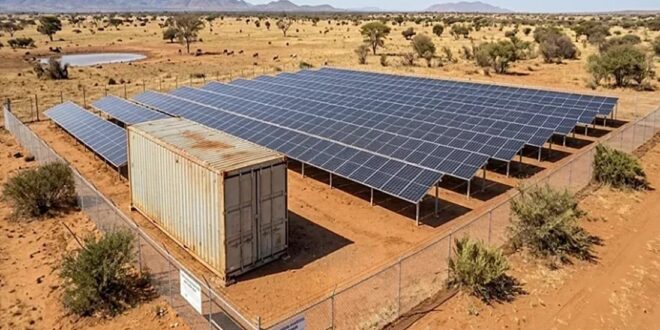
At the centre of this transition is the 100MW Mmadinare Solar PV Cluster, which is now fully operational and feeding 100MW of renewable electricity into the national grid. Speaking at a meeting in Mmadinare, Minister of Minerals and Energy, Bogolo Joy Kenewendo, thanked the community for supporting the project and Botswana’s broader efforts to achieve greater electricity self-sufficiency and increase renewable-energy generation. Located on a 275 hectare site at Phokoje lands in Mmadinare, the solar plant is supplementing the approximately 500MW of coal-fired generation from the four operational units at Morupule B Power Station.
Kenewendo said the 100MW generated at Mmadinare has “transformed generation quantities”, significantly improving the country’s electricity supply position. The additional capacity has also enabled Botswana to export excess electricity to the Southern African region during off-peak periods. The development marks an important shift for a country that has historically relied heavily on imported electricity to meet domestic demand. With domestic generation strengthening, Botswana is reducing exposure to costly imports while creating greater scope to participate in regional electricity markets.
The benefits extend beyond electricity supply. Kenewendo said the solar project, together with the successful rehabilitation of Morupule B, has supported the growth of small, medium and micro enterprises while reducing the cost of importing power. The Mmadinare plant is also contributing to a rapidly expanding renewable-energy base. Together with other solar projects across the country, more than 209MW of renewable-energy capacity is now being injected into the national grid, supplying cleaner electricity to homes and businesses.
The plant’s operating performance further strengthens the case for utility-scale solar investment. Botswana Power Corporation Chief Executive Officer David Kgoboko said Mmadinare had generated more than 243,288MWh of electricity since commissioning. “I am particularly pleased that since its commissioning, the plant has already generated more than 243,288 MWh of electricity.” Kgoboko said the facility has maintained availability and reliability averaging above 99%, demonstrating the operational value of the project and the partnership between Government, BPC and private investors. The project was financed, developed and constructed by Scatec, which, as the Independent Power Producer, is responsible for its operation and maintenance under a 25 year Power Purchase Agreement with BPC as the offtaker.
The government is now seeking to build on this momentum through a broader strategic push for renewable energy. The Ministry of Minerals and Energy, with support from Sustainable Energy for All (SEforALL), recently convened stakeholders for a two-day workshop to present and clarify findings from the National Renewable Energy and Power Sector Plan (REPSP). The plan is designed to translate Botswana’s ambition to increase renewable-energy uptake into a credible and financeable pathway, covering renewable-energy potential, grid investment requirements and the policy and institutional reforms required to support implementation.
Acting Director of the Department of Energy, Baruti Regoeng, stressed that the REPSP does not stand alone, but forms part of Botswana’s wider energy-planning framework. The National Energy Policy provides the overarching ambition for a secure, reliable and affordable energy system, while the Integrated Resource Plan sets out the least-cost generation expansion pathway.
Botswana has also made specific access and investment commitments through its National Energy Compact under the Mission 300 initiative, providing an additional framework for expanding electricity access and mobilising investment.
The country’s improving generation position is also being reinforced by the operationalisation of the 100MW Jwaneng Solar PV Cluster and Morupule A, further reducing dependence on electricity imports. The broader opportunity lies in converting this increased generation capacity into sustained regional trade. Botswana’s abundant solar resource provides a competitive foundation for expanding renewable generation, while stronger domestic supply creates the potential to serve neighbouring markets when surplus power is available.
As investment in generation is matched with grid modernisation and stronger regional interconnections, Botswana is positioning its electricity sector not only around self-sufficiency, but around greater participation in the Southern African power market. The emerging power surplus therefore represents more than an improvement in electricity security. It creates a platform for industrial growth, investment and regional energy trade, potentially transforming Botswana from a net power importer into a more competitive electricity supplier within the region.
