 Botswana Mining Review Comprehensive Coverage of the Progress and Achievements in the Mining Sector


Related Articles


Botswana is accelerating plans to diversify its mineral-dependent economy, turning toward alternative metals and localized manufacturing to cushion against prolonged volatility in the global diamond market.
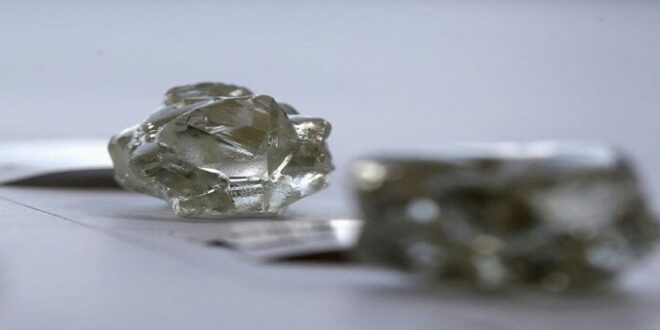
Diamonds currently account for roughly 80% of the southern African nation’s export revenue and 30% of its gross domestic product. However, falling market prices driven by shifting global demand and the rapid rise of lab-grown alternatives have highlighted the structural risks of relying on a single commodity.
In response, the government is looking underground for new revenue streams. Botswana’s Minister of Minerals and Energy, Bogolo Joy Kenewendo, announced a target to raise non-diamond mineral exploration spending to approximately $11 million by 2029. The push comes as official estimates show nearly 70% of the country’s land remains unexplored.
Early results are already taking shape. The country is entering the final phases of establishing its first manganese mine following a feasibility study by Canadian developer Giyani Metals Corp., which confirmed the economic viability of its battery-grade manganese project.
Beyond extraction, government policy is shifting heavily toward local value addition and procurement. Speaking at the Future of Mining Summit in Gaborone, Debswana Diamond Co. General Manager Mogakolodi Maoketsa emphasized that internal industrialization is vital to building resilient supply chains.
“Mining companies can provide the initial market base needed for local manufacturers to grow, improve their capabilities, and eventually compete beyond the mining sector,” Maoketsa said.
Industry leaders note that local procurement agreements are already being implemented across major mining operations to stimulate capital circulation, though structural hurdles remain.
“All mining companies operating in the country have entered into an agreement that would support local manufacturing,” said Charles Siwawa, Chief Executive Officer of the Botswana Chamber of Mines. However, he acknowledged that progress requires patience “due to various factors, among them business acumen by potential investors, financial availability and access, ability to break into the market and so forth.”
Siwawa noted that commercial banks and financial institutions are increasingly eager to back domestic production, citing early progress in mining equipment, industrial chemicals, and engineering services. He projects that Botswana’s manufacturing sector, which currently generates about 6.5% of GDP, could expand into double-digit percentages over the coming years.
Even as Botswana ramps up alternative industrial sectors, analysts caution against abandoning its core competency.
“Since they already have a head start, implementing the right policy framework would make sure that they become the regional diamond beneficiation hub,” said Dr. Akisa Mwangi, Chairman of the Department of Mining, Materials and Petroleum at Jomo Kenyatta University of Agriculture and Technology. “Value addition of the diamond will help in maximizing its economic value, lead to the creation of more jobs, and skills development within the value chain.”
