 Botswana Mining Review Comprehensive Coverage of the Progress and Achievements in the Mining Sector


Related Articles



Africa’s ability to capture greater economic value from its mineral resources is emerging as a central theme in China–Botswana relations, with the two countries committing to deepen cooperation in sustainable mining, green technology, investment and mineral value chains.
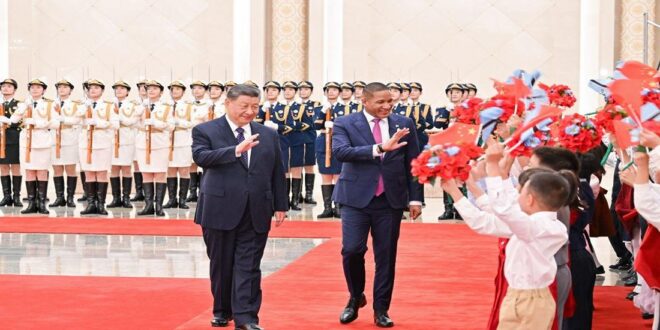
During talks with Botswana President Duma Boko in Beijing, Chinese President Xi Jinping said African resources belonged to African countries and that this principle should underpin mining cooperation. China was willing to share its experience in mining development and help African countries formulate strategies suited to their national circumstances, he said, while encouraging Chinese enterprises to transfer green technologies adapted to African conditions.
The discussions signal opportunities for Botswana to strengthen cooperation with Chinese companies beyond mineral extraction, particularly through sustainable resource development, technology transfer and industrial capacity building. The two countries expressed satisfaction with progress in mining cooperation and agreed to deepen collaboration on sustainable mineral development and the energy transition, including through cooperation relating to the Khoemacau Copper Mine.
They also welcomed Botswana’s participation in the International Economic and Trade Cooperation Initiative on Green Mining and Minerals and agreed to work towards implementing a memorandum of understanding on green mining cooperation. In the diamond sector, the two sides committed to strengthening collaboration through the Kimberley Process and improving access for Botswana’s diamond products to the Chinese market.
Financing and investment will be critical to translating these ambitions into commercially viable projects. Xi said China would promote affordable, sustainable and innovative financing models and support a more enabling environment for investment and business operations. The bilateral commitments also encourage companies from both countries to pursue investment opportunities across mining, energy, infrastructure, agriculture, manufacturing, logistics and digital technology.
The expanded partnership comes as Botswana seeks to diversify its economy and strengthen productive sectors beyond its longstanding dependence on diamonds. Cooperation in mineral development and green technology could support this effort, although the scale of the benefits will depend on the projects pursued, the terms of investment and the extent to which local industries participate in higher-value activities.
Trade access forms another pillar of the agreement. Botswana welcomed China’s proposed zero-tariff measures for 53 African countries and committed to working with Beijing to expand bilateral trade and facilitate access for its products. The two sides identified beef, citrus and other agricultural exports as priorities, alongside efforts to address technical, sanitary, phytosanitary and other market-access requirements. They also agreed to make greater use of Green Channel 2.0 and other trade facilitation mechanisms and to advance early-harvest arrangements under the Economic Partnership for Common Development Agreement within the Southern African Customs Union, subject to applicable regional and national processes.
Beyond traditional sectors, the countries intend to expand cooperation in digital transformation, artificial intelligence, e-commerce, smart cities and green development. Both sides also emphasised stronger business-to-business engagement through investment missions, forums and other platforms to convert identified opportunities into viable projects, productive capacity and tangible economic outcomes.
The commitments form part of a broader decision to elevate China–Botswana relations to a Comprehensive Strategic Cooperative Partnership, building on 51 years of diplomatic relations. During his state visit, Boko also visited Contemporary Amperex Technology Co. Limited (CATL) in Fujian Province, highlighting potential opportunities in advanced manufacturing, clean energy technology, skills development and investment.
For Botswana’s mining industry, the strategic priority is to translate closer relations into investment that strengthens domestic capabilities, supports sustainable operations and retains more economic value within the country. The partnership’s significance will ultimately be measured by the projects it delivers, the technology and skills transferred, and the extent to which Botswana’s mineral wealth supports broader industrial development.
