 Botswana Mining Review Comprehensive Coverage of the Progress and Achievements in the Mining Sector


Related Articles


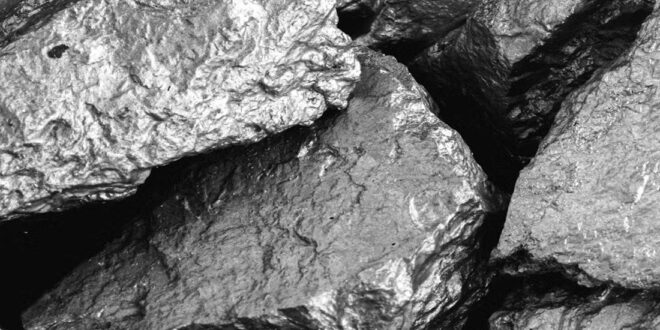
Giyani Metals’ proposed $535 million K.Hill manganese project is emerging as a defining test of Botswana’s ambitions to position itself within the global battery minerals value chain, at a time when demand for electric vehicle inputs is accelerating.
A newly released definitive feasibility study points to strong underlying economics, projecting $1.6 billion in net free cash flow over a 25-year mine life, against total life-of-mine capital expenditure of $679 million. The project, located about 80km from Gaborone, is designed to produce high-purity manganese sulphate monohydrate (HPMSM), a critical battery-grade material used in electric vehicle manufacturing.
For Botswana, the stakes extend beyond a single project. The ability to move from raw mineral extraction into higher-value processing will determine whether the country can capture meaningful upside from the global energy transition or remain on the margins of the battery supply chain. “We will be progressing our discussions with strategic partners and evaluating opportunities within the battery-grade manganese sector that have the potential to enhance value for our shareholders,” said Nigel Robinson, interim Executive Chair, Giyani Metals.
The project enters a highly concentrated global market, with China currently controlling 95% of manganese processing capacity. This dominance has created both a challenge and an opportunity for emerging producers seeking to establish alternative supply chains. Robinson added, “With China controlling 95% of manganese processing capacity, access to non-China supply of this critical material is constrained. The DFS marks a significant step towards a viable solution.”
Giyani’s path to this point has been uneven. The company has undergone multiple leadership changes in recent years and faced delays that pushed its production timeline from an earlier 2025 target to 2029. By then, however, market dynamics could shift in its favour, with projections indicating the onset of a supply deficit in battery-grade manganese, followed by sustained annual shortfalls. Investor backing has started to take shape. South Africa’s Industrial Development Corporation has provided $16 million in debt financing, while African Rainbow Minerals, through its ARCH Emerging Markets Partners, has taken a 19.99% stake alongside a royalty agreement.
Interest has also come from the United States, with a $225 million letter of intent from the Export-Import Bank signalling potential strategic alignment. At the same time, competition in the region is intensifying. Other Southern African players are also moving to capture value in the battery materials space, underscoring the urgency for execution. K.Hill represents more than a mining development as it is a strategic inflection point. If successfully delivered, it could anchor Botswana’s entry into a high growth segment of the global energy economy. If delayed or derailed, it risks reinforcing the structural challenges that have long limited Africa’s participation in downstream mineral value chains.
